


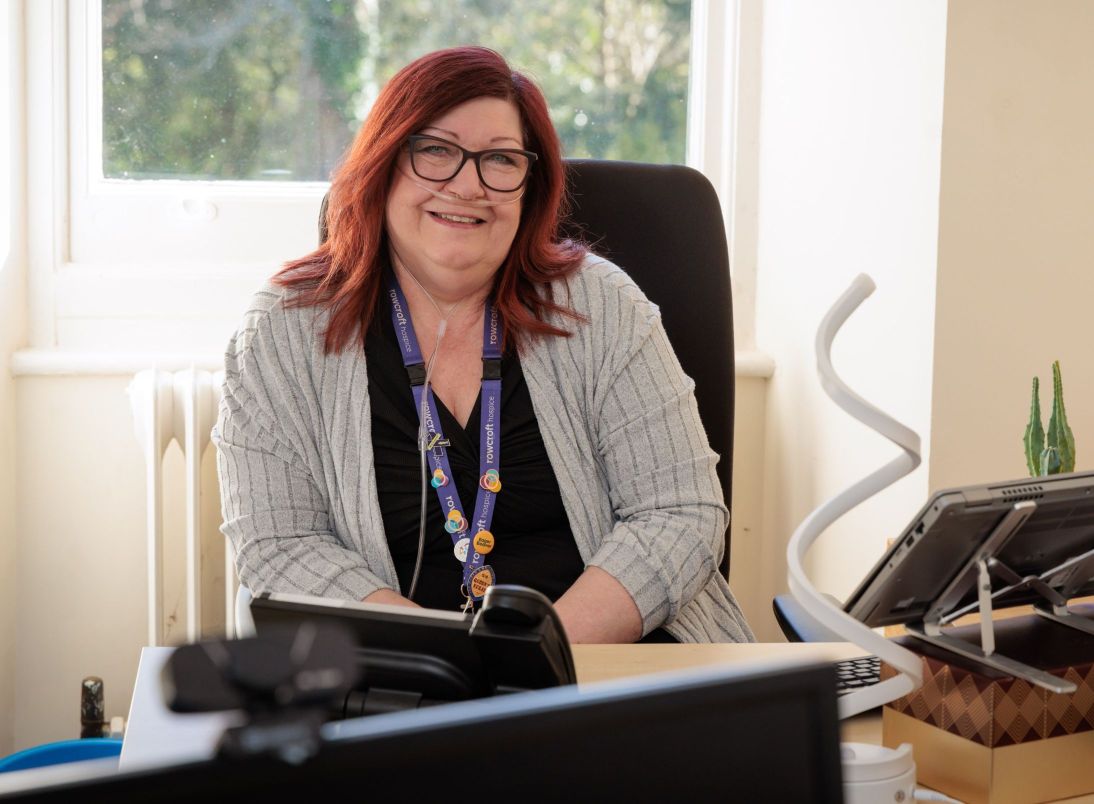
Creating a workplace where everyone can thrive
At Rowcroft Hospice, we’re committed to creating a workplace where people feel valued, supported and able to thrive. We know that building a truly inclusive culture doesn’t happen overnight, and we’re on a continuous journey of learning, listening and improving. While there’s always more work to do, stories like Karenne Weaver’s show the positive impact that supportive and flexible working practices can have.
Karenne, Rowcroft’s Head of Community and Hospice at Home, has lived with a long-term lung condition for many years and uses oxygen therapy. Despite the challenges, Karenne has continued to develop her career and progress into a leadership role, supported by colleagues and practical adjustments along the way.
Feeling supported to grow
Karenne’s experience at Rowcroft has given her the confidence to continue working and pursuing opportunities for progression. She feels that the support she’s received has enabled her to build a fulfilling career while managing her health needs.
“At Rowcroft, I’ve never been discriminated against because of my health condition”, says Karenne. “I’ve progressed my career into a leadership role despite needing that extra support.”
A culture built on listening and adapting
Creating an inclusive workplace starts with recognising that people have different needs and experiences. At Rowcroft, we’re working to foster a culture where staff and volunteers feel seen, heard and supported to be themselves.
For Karenne, practical things such as accessible parking, a stair lift and space for her oxygen equipment have made a significant difference to her day-to-day working life:
“People have really thought about who I am as a person. It makes me feel really valued, because I’m being seen as an individual rather than just an employee. The impact of this inclusive approach is huge.”
She believes that taking the time to understand individual circumstances is key.
“It’s about treating people as individuals and looking at their individual needs, then making adjustments so people can access work and do their jobs.”
Why representation matters
For Karenne, seeing people with disabilities represented in leadership positions is crucial.
“As a child, I never saw anyone in a leadership role with a disability,” says Karenne. “Yet we all need role models that reflect who we are.
“Due to my health condition, I really thought I was going to have to give up work. But with the right support, I’ve been able to continue into a leadership role.”
Karenne hopes that by being visible in her role, she can help others feel that career progression is possible, regardless of the challenges they may face.
Inclusion and patient care
For Karenne, inclusion isn’t just about the workforce. She believes it directly influences the care Rowcroft provides:
“If we see and respond to individual needs in the office, it continues out into patients’ homes. It becomes a value we hold onto and reflect.
“At Rowcroft, person-centred care is at the heart of everything we do. By recognising and valuing the individuality of our colleagues, we can strengthen the empathy, understanding and compassion that we bring to patients and families.”
An ongoing journey
While Karenne’s experience highlights many positive aspects of working at Rowcroft, she is also clear that inclusion is not a destination. Like all organisations, Rowcroft continues to learn, adapt and look for ways to do better, and we welcome input from our community to help us.
“We can never sit on our laurels and say we are completely inclusive. We have to keep improving what we’re doing.”
Building an inclusive culture requires ongoing commitment, honest conversations and a willingness to challenge ourselves. We’re proud of the progress we’ve made so far, but we recognise there is still more to do to ensure everyone feels they belong and can be their authentic selves at work.
More blogs from Rowcroft